Risk Assessment
Did you know?
For many years, the terminology and methods used in human risk or hazard assessment were inconsistent, which led to confusion among scientists, the public, and others.
(Image Source: iStock Photos, ©)
"Red Book" for Risk Assessment (1983)
In 1983, the (U.S.) National Academy of Sciences (NAS) published Risk Assessment in the Federal Government: Managing the Process. Often called the "Red Book" by toxicologists and others, it addressed the standard terminology and concepts for risk assessments.
Figure 1. Toxicology-based approaches to hazard identification, dose-response assessment, exposure analysis, and characterization of risks were described in the 1983 Red Book
(Image Source: National Academies Press)
Key Terms
The following terms are routinely used in risk assessments:
- Hazard — capability of a substance to cause an adverse effect.
- Risk — probability that the hazard will occur under specific exposure conditions.
- Risk assessment — the process by which hazard, exposure, and risk are determined.
- Risk management — the process of weighing policy alternatives and selecting the most appropriate regulatory action based on the results of risk assessment and social, economic, and political concerns.
Risk Assessment Steps
The four basic steps in the risk assessment process as defined by the NAS are:
- Hazard identification — characterization of innate adverse toxic effects of agents.
- Dose-response assessment — characterization of the relation between doses and incidences of adverse effects in exposed populations.
- Exposure assessment — measurement or estimation of the intensity, frequency, and duration of human exposures to agents.
- Risk characterization — estimation of the incidence of health effects under the various conditions of human exposure.
Once risks are characterized in step 4, the process of risk management begins (Figure 2).
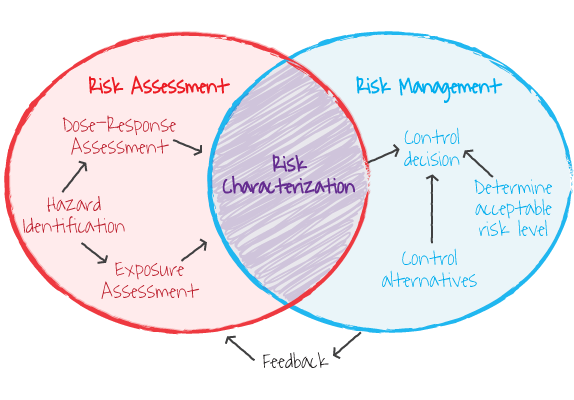
Figure 2. Interaction between processes of risk assessment and risk management
(Image
Source: ORAU, ©)
"Silver Book" for Advancing Risk Assessment (2009)
A newer book by the NAS, Science and Decisions: Advancing Risk Assessment (2009), often called the “Silver Book” by toxicologists and others, emphasizes uncertainty and variability and cumulative risk, and notes that risk assessment "is at a crossroads."
Figure 3. The 2009 Silver Book includes approaches for improving risk analysis and a framework for risk-based decision-making
(Image Source: National Academies Press)
Risk-Based Decision Making
The co-authors of this Silver Book proposed a framework for risk-based decision-making (Figure 4). The framework consists of three phases:
Enhanced problem formulation and scoping — available risk-management options are identified.

Planning and assessment — risk-assessment tools are used to determine risks under existing conditions and under potential risk-management options.
Risk management — risk and non-risk information is integrated to inform choices among options.

The core of the framework, as noted in the Silver Book, includes the risk assessment paradigm of the Red Book, but differs primarily in its initial and final steps:
- "The framework systematically identifies problems and options that risk assessors should evaluate at the earliest stages of decision-making."
- "It expands the array of impacts assessed beyond individual effects (for example, cancer, respiratory problems, and individual species) to include broader questions of health status and ecosystem protection."
- "It provides a formal process for stakeholder involvement throughout all stages but has time constraints to ensure that decisions are made."
- "It increases understanding of the strengths and limitations of risk assessment by decision-makers at all levels, for example, by making uncertainties and choices more transparent."
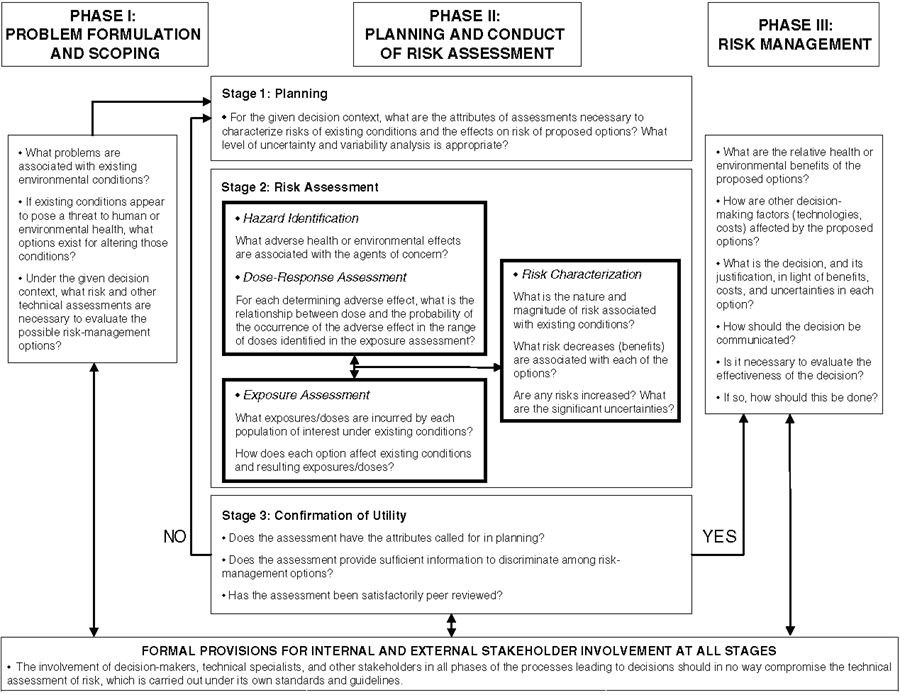
Figure 4. Framework for risk-based decision-making
(Source: "Silver Book," chapter 8)
Latest Approaches
Other parts of ToxTutor highlight the latest approaches used in risk assessment. For example:
- Hazard Identification describes the emerging approach to hazard identification called Adverse Outcome Pathways (AOPs).
- Testing for, and Assessing Toxicity describes the numerous global efforts made, since approximately 1990, to reduce and replace use of laboratory animals in toxicology studies. Included are efforts to develop and validate in vitro methods and the emerging use of in silico methods.